
India at a Crossroads: Mars Mahadasha, Explosive Transits and the Challenging Years Ahead (2026–2027)
India Entering a Highly Sensitive Astrological Cycle
According to the Taurus Ascendant foundation chart of Independent India (15 August 1947, 00:00 hrs, New Delhi), the nation entered the Mars Mahadasha on 9 September 2025. This seven-year period appears particularly sensitive because Mars functions as both the 7th lord (Maraka) and 12th lord, governing foreign influences, covert operations, espionage, losses, and external threats.
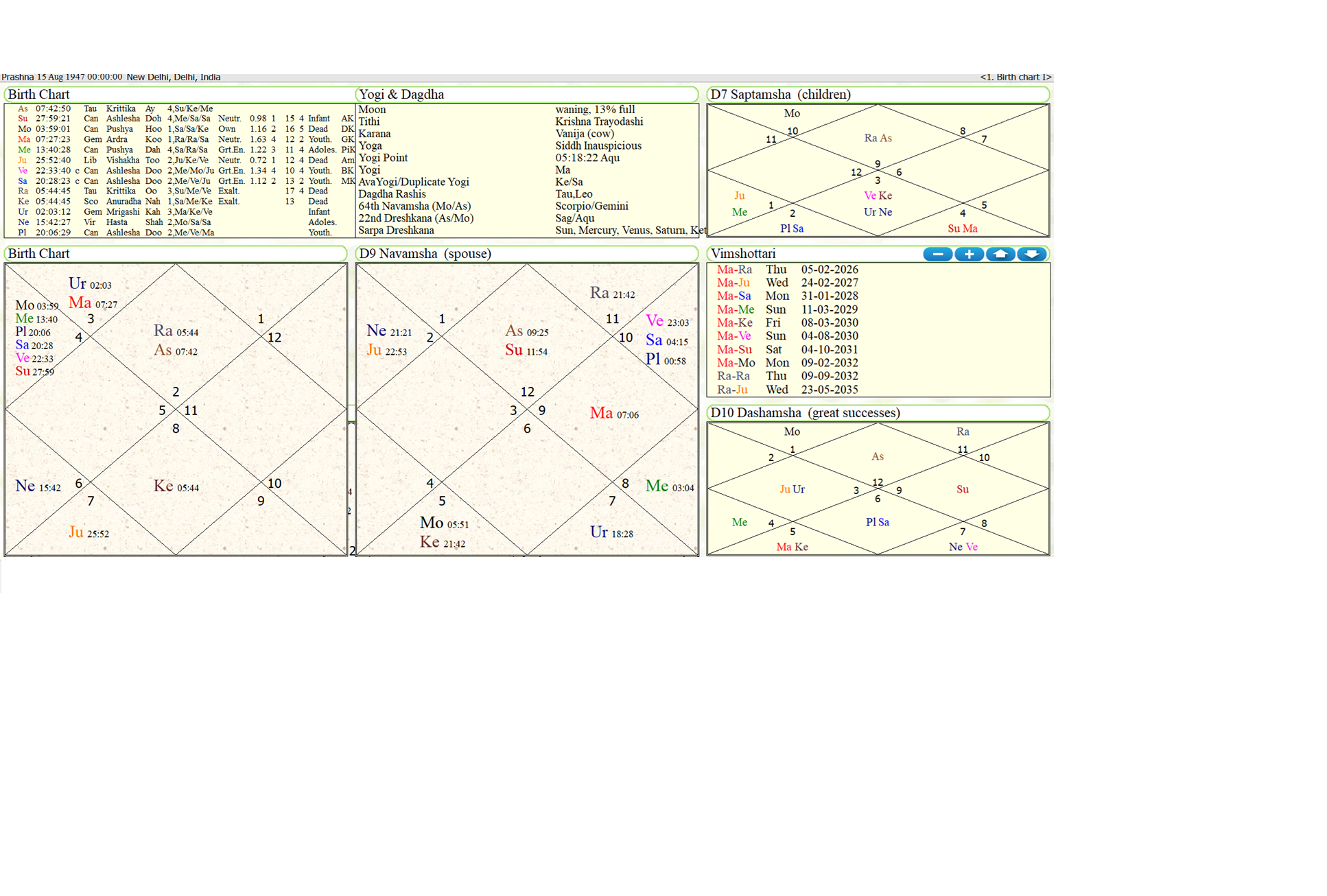
Mars is positioned in the 2nd house (Gemini), another Maraka house, linking the period with concerns relating to national wealth, economic stability, security, public sentiment, and strategic vulnerabilities.
The current operating period of Mars–Rahu, running until 24 February 2027, followed by Mars–Jupiter up to 31 January 2028, appears exceptionally challenging from a mundane astrology perspective.
Mars–Rahu: A Period of Volatility and External Pressures
Mars and Rahu are both natural malefics. Their combined influence often coincides with:
- Border tensions and military posturing
- Intelligence failures and espionage activities
- Terror-related incidents
- Internal unrest and riots
- Economic disruptions
- Sudden accidents, fires and explosions
- Heightened geopolitical uncertainty
- The Foreign investment in India will reduce tremendously
- Mars Transit over the Natal Mars in Gemini will be a time to be seen for India Economy from the 3rd August to 19th Sept. 2026. The Economy may be hit hard
The Mars–Rahu period appears capable of producing situations that test national resilience, security mechanisms, and political leadership.
Mars–Jupiter: Why the Period Remains Sensitive
Following Mars–Rahu, the country enters Mars–Jupiter.
24 February 2027, followed by Mars–Jupiter up to 31 January 2028, appears exceptionally challenging from a mundane astrology perspective.
For Taurus Ascendant, Jupiter becomes a functional malefic as lord of the 8th and 11th houses. Positioned in the 6th house and aspects natal Mars, Jupiter activates themes connected with:
- Conflicts and adversaries
- Litigation and disputes
- National health concerns
- Hidden enemies
- Financial pressures
- Natural calamities
Consequently, the Mars–Jupiter period from February 2027 to January 2028 may continue the turbulence rather than immediately providing relief.
Mars Transit Through Aries: 12 May – 21 June 2026
Mars transiting its own sign Aries occupies the 12th house from the national chart.
This placement traditionally signifies:
- Secret operations
- Intelligence activities
- Defence expenditure
- Foreign involvement
- Strategic military actions
- Hidden enemies
Mars simultaneously aspects the:
- 3rd house – borders, communication and military preparedness
- 6th house – enemies and conflicts
- 7th house – foreign nations and diplomatic relations
Such a configuration often coincides with heightened security concerns and aggressive geopolitical developments.
Mars Over Natal Rahu: June–August 2026
As Mars enters Taurus and crosses natal Rahu, the chart becomes increasingly sensitive.
Possible manifestations include:
- Foreign interference
- Espionage networks
- Cyber warfare
- Communal disturbances
- Mass protests
- Intelligence-related developments
- Economic uncertainty
Classical references indicate that Mars influencing Aries and Taurus during adverse dashas can produce periods of national stress and instability.
Mars in Cancer: Activation of the Five Natal Planets from the 19th Sept. 2026
One of the most critical periods arrives when Mars enters Cancer and influences India’s powerful cluster of natal planets located there.
The conjunction and activation of:
- Moon
- Sun
- Mercury
- Venus
- Saturn
can create extraordinary pressure on matters represented by the 3rd house.
3rd House Significations
The 3rd house governs:
- Borders
- Communications
- Transport systems
- Railways
- Information networks
- Media
- Internal security coordination
- Neighbouring countries
When heavily afflicted, issues connected with these areas can become prominent.
Mars and Jupiter in Cancer: A Difficult Combination From 19th Sept till 30th Oct. 2026 over the 5 planets in the natal chart
Cancer becomes particularly sensitive because:
- Mars is debilitated there.
- Jupiter becomes exalted there.
A debilitated Mars often behaves unpredictably and may create overreactions, miscalculations, emotional decision-making and instability.
The simultaneous presence of Jupiter can magnify events rather than necessarily neutralize them.
The period may therefore witness:
- Border confrontations
- Political tensions
- Administrative challenges
- Security concerns
- Natural calamities
- Public unrest
The Leo Cluster of November 2026
The period around November 2026 deserves close observation.
Key Developments
- Jupiter enters Leo around 1 November 2026.
- Mars enters Leo on 12 November 2026.
- Ketu subsequently joins the configuration.
The convergence of Mars, Jupiter and Ketu near 1° Leo forms a rare and potentially explosive pattern on the 14th Nov. 2026 in the 2nd from Moon and in the 4th From Lagna
Why the Fourth House Becomes Important
Leo represents the 4th house from India’s Taurus Ascendant.
The Fourth House Signifies
- Internal peace
- Public happiness
- National morale
- Agriculture
- Real estate
- Educational institutions
- Land and property
- Infrastructure
- Natural resources
- Domestic stability
- Opposition politics
Affliction to the 4th house often reflects disturbances affecting the country’s internal equilibrium.
Potential manifestations include:
- Public unrest
- Large-scale protests
- Political polarization
- Agricultural distress
- Infrastructure disruptions
- Natural disasters affecting land and property
- Internal security concerns
Impact from the Natal Moon
Leo also becomes the 2nd house from India’s natal Moon in Cancer.
The 2nd house from Moon governs:
- National treasury
- Food supply
- Economic reserves
- Public confidence
- Speech and political discourse
- Family-like cohesion within society
Affliction here can produce:
- Financial volatility
- Inflationary pressures
- Political controversies
- Social divisions
- Concerns regarding economic management
Ketu Enters Cancer: 26 November 2026
Ketu’s transit over the natal Cancer cluster for approximately eighteen months is highly significant.
Ketu is associated with:
- Separation
- Fragmentation
- Sudden events
- Confusion
- Hidden factors
- Unexpected developments
Its passage over five natal planets can activate dormant vulnerabilities within the national chart.
The Story of a Fallen (Debilitated) Planet. In the year 2026 to 2028 3 Planets will be fallen Jupiter in Cancer, Mars in Cancer and Saturn in Pisces most difficult time for India and the World
As mentioned above the time for Fallen Jupiter in Cancer in Retrogression from the 26th Jan 2027 to 15th April in Cancer when he becomes direct and shifts in Leo again on the 28th June 2027
Mars Falls in Cancer in retrogression on the 10th March and Joins Ketu and Jupiter . 2 Planets Fallen and retrograde in Cancer and shifts to Leo on the 28th April 2027. Mars becomes direct on the 2nd April 2027
Saturn Becomes Retrograde in Aries and Falls in Pisces on the 21st Oct. 2027 and remains in Retrogression till 25th Dec. 2027 and Fallen in Pisces. On the 25th Feb. 2028 it goes back in Pisces
From the above it is clear that the year 2027 will witness 3 Planets Fallen and Retrograde in Cancer and Pisces and creating Havoc in the world by Water, Tsunami, Wars in the sea
Classical astrology often treats a debilitated malefic as particularly troublesome.
A fallen planet may express:
- Distorted judgment
- Lack of restraint
- Extreme reactions
- Internal weakness
- Loss of direction
- Uncontrolled outcomes
A debilitated Mars in Cancer may symbolize:
- Aggressive actions producing unintended consequences
- Strategic miscalculations
- Escalation of conflicts
- Security challenges
When joined by Ketu and influenced by Jupiter, the results may become amplified and difficult to predict.
Jupiter in Retrogression falls back in Cancer and Joins Ketu most dangerous situation on the 25th Jan 2027
January–March 2027: A Highly Sensitive Window
Several developments converge:
25 January 2027
Jupiter retrogrades back into Cancer and joins Ketu over the natal Cancer cluster.
10 January 2027
Mars turns retrograde in Leo.
10 March 2027
Mars retrogrades back into Cancer joins Jupiter Fallen and Ketu and Mars himself Fallen and Debilitated most dangerous combination and all of them in close association over the 3rd house of boarders—– Boarder clashes with neighbouring countries, Rail and Air Accidents Earthquakes and Natural disasters
This creates a rare concentration involving:
- Retrograde Mars
- Retrograde Jupiter
- Ketu
- Five natal planets
Such a combination can activate multiple layers of stress simultaneously.
Eclipse in Capricorn – February 2027 21:25 hrs IST
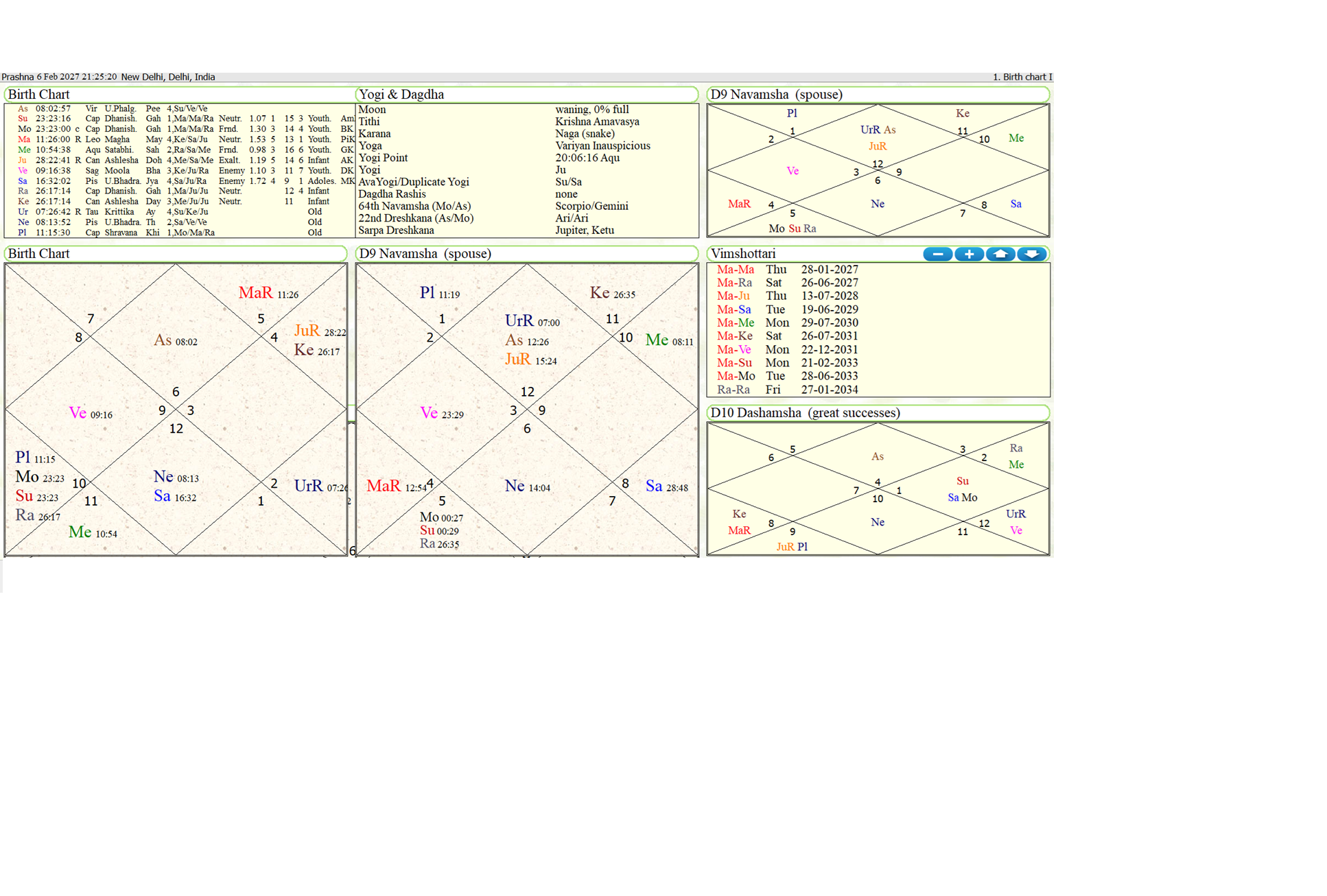
The eclipse of 6 February 2027 falls in Capricorn, a sign traditionally linked with governance, administration and national structures.
When eclipses combine with difficult dasha periods and heavy planetary afflictions, they often act as triggers for events already indicated in the chart.
The Eclipse point of will be activated by Transit Fallen and Debilitated Mars on the 31st March 2027
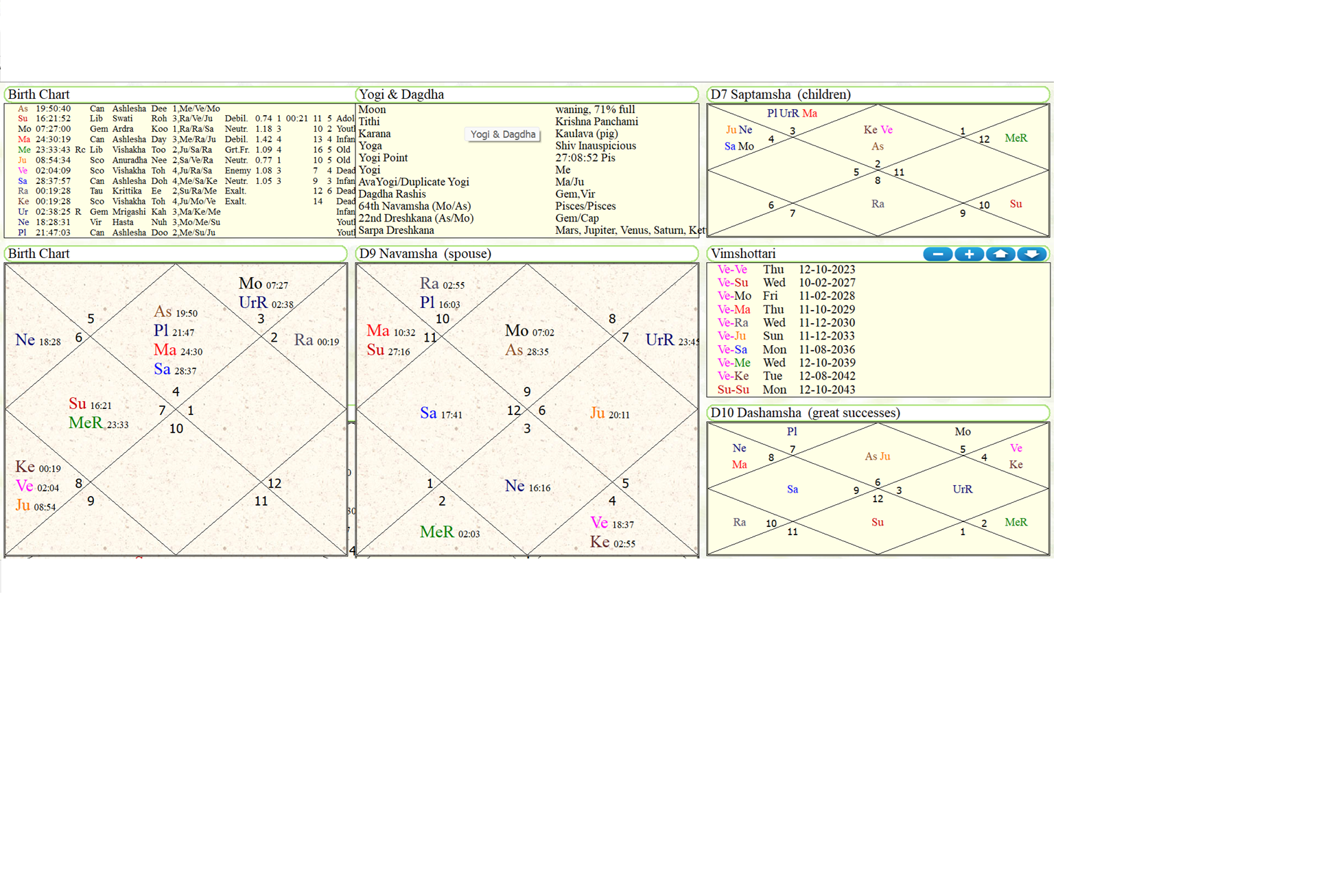
Progression charts of India Foundation chart
Year August 2025 to August 2026
Moon in the star of Sun who is ill placed and Debilitated , hence not good for the Head of the States and the PM of the Country
Aug. 2026 to Aug 2027
10th Lord from the 10th house from Moon and the 10th house Lord in the Birth chart is Saturn and with Debilitated Mars in the Lagna who is also in Vish Ghati not good year
August 2027-Aug 2028
Moon in the star of Rahu and ill placed most difficult year
Chart below
Conclusion
From a mundane astrological perspective, the period extending from mid-2026 through early 2027 appears exceptionally sensitive for India. The combined effects of Mars Mahadasha, Mars–Rahu and Mars–Jupiter periods, multiple debilitated and retrograde planetary configurations, Ketu’s transit over the Cancer stellium, and the activation of key eclipse points suggest a time demanding heightened caution.
The areas most likely to require attention include:
- National security
- Border management
- Internal stability
- Economic resilience
- Disaster preparedness
- Political cohesion
Whether these combinations manifest as major challenges or are successfully managed will depend upon how events unfold and how institutions respond during this important cycle.
